How to Use Nail Foil: Check the Transfer System
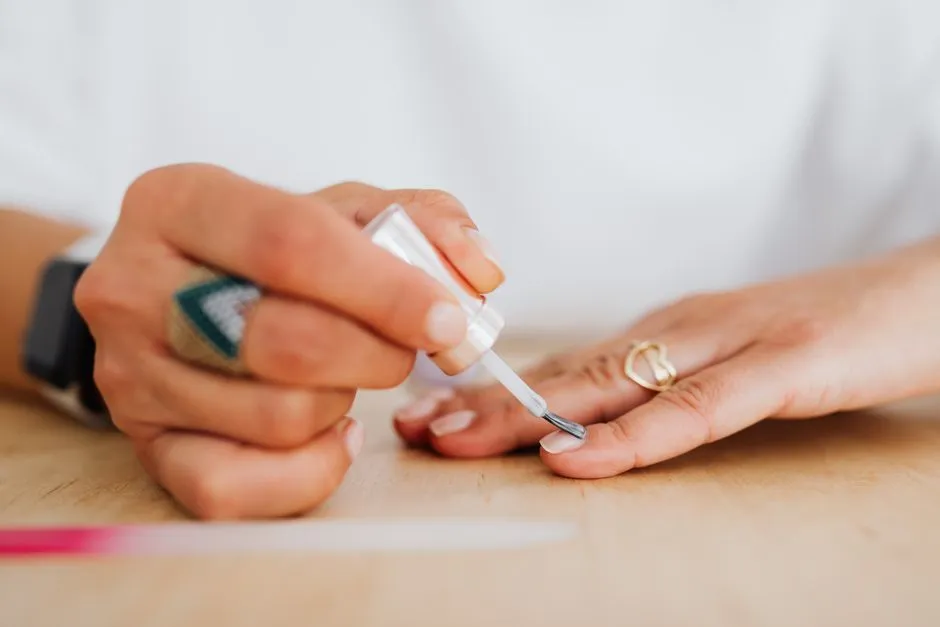
- How do you use nail foil without mixing up systems?
- What exactly are you comparing?
- What can you learn from the Maniology instructions?
- Why shouldn't you fill in a missing step from another brand?
- Why is foil transfer gel a separate decision?
- What should a complete system checklist contain?
- What can detached tips establish?
- How do you record an incomplete transfer usefully?
- Why is the finishing layer part of the system?
- When should you stop instead of troubleshooting?
- Frequently asked questions
- Sources
How do you use nail foil without mixing up systems?
To use nail foil, first identify whether its transfer system needs air-dry adhesive or a professional lamp-cured gel. Read the complete sequence for the exact foil, base, adhesive, carrier removal, and finish before opening products; instructions are not interchangeable. Confirm compatibility with any detached practice tip rather than assuming it. Keep products off skin, follow ventilation and label warnings, and stop and contact a clinician for a reaction. This guide checks instructions, not a universal application recipe.
A sheet's pattern does not identify its adhesive, preparation, or finishing layers. Two tutorials can both say “nail foil” while describing different processes.
This is a source-based guide to choosing and reading a system. It does not claim a tested manicure, guaranteed gap-free result, or universal at-home technique. The worked exercise stays on paper because the published examples below do not establish every required practice-substrate pairing.
What exactly are you comparing?
Compare the full sequence rather than one attractive bottle.
| System example | What its maker actually specifies | What cannot be carried over |
|---|---|---|
| Maniology Marble Nail Foil and Nail Foil Glue Set | Drying glue, a visual color change, oriented foil placement, and a layered finish | A gel cure program or an invented peel speed |
| CJP Full Foil Glue | Air drying, a transparent readiness stage, rubbing and a quick lift, then CJP finishing products | Another maker's adhesive, substrate approval, or top-coat sequence |
| Daily Charme Foil Transfer Gel | A professional gel product with a specified lamp-based application and finishing system | An air-dry interpretation or a home cure-time substitution |
These are descriptions of instructions, not performance rankings. The first two product pages showed unavailable/backordered status when checked; they are documented examples, not promises of current stock. No price or wear-time comparison is offered.
A foil transfer is also a different task from removing a manicure with foil wraps. Keep the product's full name in your notes so a search for “foil instructions” does not send you to the wrong process.
What can you learn from the Maniology instructions?
The Maniology Marble set page describes five stages:
- Cut foil into nail-sized strips.
- Apply and dry a base coat.
- Use a thin glue layer and wait for its white-to-clear change and stated tacky stage.
- Position the design facing upward and rub it onto the surface.
- Repeat the adhesive/placement stages for the desired appearance, then use its No Smudge layer followed by a regular top coat.
That is a reading summary, not our instruction to apply it to your body. Do not perform a bare-fingertip tack check.
Notice a real omission: this web list does not explicitly describe lifting away the carrier. Ask the manufacturer for the complete current package instructions before beginning, rather than guessing that the entire sheet stays under the finish.
Why shouldn't you fill in a missing step from another brand?
CJP's Full Foil Glue page explicitly calls its product air-dry. It describes letting the wet layer become transparent, applying and rubbing the foil, then pulling it away quickly. It names CJP gloss or matte finishing products.
This shows that the carrier-lift stage belongs in a complete instruction set. It does not establish the correct peel speed or finish for the Maniology product, or confirm that either adhesive works with an arbitrary practice tip.
Keep the two records separate. Do not build a combined sequence with one brand's readiness description, another brand's lift, and a third brand's finish, then call it the manufacturer's method.
If a supplier page and the package differ, record both versions and ask the maker which applies to your product. Include the exact product name and available batch information. Do not resolve a disagreement by choosing whichever version looks faster.
Why is foil transfer gel a separate decision?
Daily Charme's Foil Transfer Gel is labeled for professional use. Its published sequence includes a lamp-cured layer and named finishing products. That is enough to distinguish it from the air-drying examples; the cure schedule is deliberately not reproduced as a home workflow here.
The British Association of Dermatologists warns that skin exposure to uncured artificial-nail products and insufficient curing can increase sensitization risk. Its guidance also ties curing to the recommended lamp rather than lamps borrowed across separately purchased systems. Use appropriately trained professional guidance for gel products. BAD artificial-nail warning
A shiny surface, successful transfer, or apparent firmness does not prove that a gel process was performed correctly. Adding more cycles is not the missing answer to an unidentified product or incompatible lamp. Do not transfer a professional gel tutorial onto a home lacquer project.
What should a complete system checklist contain?
Use this original checklist before buying additional materials. “Unknown” is a useful answer when it prevents an unsupported substitution.
| Field | Record this exact information | Question if it is missing |
|---|---|---|
| Foil | Maker, product name, intended transfer process | Is this a transfer sheet or a different decoration? |
| Base | Required product and readiness instruction | What must be underneath this adhesive? |
| Adhesive | Exact name and permitted use | Is this the adhesive specified for this foil? |
| Substrate | Natural nail, artificial surface, or named practice tip | Does the maker confirm this particular use? |
| Placement | Correct facing side and permitted tool | Which side contacts the prepared surface? |
| Carrier removal | Whether and how the carrier is lifted | Where is that step explained? |
| Finishing | Every specified layer, in order | Does the system need a barrier layer and another top coat? |
| Removal and cleanup | Current directions for the whole system and tools | Which instructions apply to the finished layers? |
| Exposure warnings | Label precautions and professional-use limits | Is this appropriate for the intended user and workspace? |
Complete the checklist from the actual package and manufacturer guidance. Keep those instructions available.
Our nail-art brush guide makes a related distinction: a tool's appearance does not establish its product compatibility. Use the same discipline when choosing an applicator for foil.
What can detached tips establish?
Maniology describes its Aurora tip-holder set as a way to practice or display nail art. That stated purpose does not confirm that every tip material, attachment method, foil adhesive, and remover can be combined.
Ask the tip and product makers about the intended combination before any practical demonstration. If that approval is unavailable, keep this exercise on paper. Do not attach a sample to yourself to resolve a compatibility question, or use an improvised adhesive to mount it.
Product exposure still exists around practice objects. A successful sample would not establish allergy safety, complete curing, or suitability for a natural nail.
How do you record an incomplete transfer usefully?
Here is an original fictional record of information someone might receive from a prior demonstration. It is not a report that we performed the work.
Observation: a central pattern was reported as transferred, while one edge remained on the carrier. The record identifies the foil and adhesive but does not identify the base, finishing products, or practice-tip material.
What is known: the reported missing area is at an edge.
What is not known: whether the surface and products were compatible, whether the instructions were followed, or what caused the gap.
Next decision: obtain the missing system information before proposing another application. Do not convert “edge missing” into “press harder” or “add more adhesive.”
Send the maker the exact products, substrate, instruction version, reported sequence, and gap location. Do not share photographs exposing another person's private information.
You can still plan appearance while the technical question is unresolved. Sketch an all-over pattern and a smaller accent on paper, then compare which arrangement you actually want. Our design ideas section supports that choice without requiring another chemical application.
Why is the finishing layer part of the system?
The Maniology Smudge Free Top Coat page describes it as a barrier for nail art including foil and recommends an additional top coat over it. The page also notes that alcohol in hand sanitizer can dissolve that particular coating.
Read this as a product-specific limitation. Do not reduce hand hygiene to preserve a manicure, and do not assume a similar product name means the same formulation. Ask about a compatible finish instead.
Also distinguish a foil pattern that appears incomplete before finishing from a change first noticed after finishing. Recording the stage narrows the question you ask; it does not prove a chemical cause.
When should you stop instead of troubleshooting?
Follow the FDA's nail-product guidance: read warnings, use good ventilation, keep products away from flames and heat, and protect eyes. Keep nail products away from children. Do not use removers, primers, or solvents as improvised thinning agents or tack tests.
Do not cut or forcefully push back cuticles for more decoration space. The AAD connects that manipulation with infection risk and advises professional assessment of nail-care concerns. AAD manicure safety
Burning, swelling, rash, pain, or another unexpected reaction means stop and contact a healthcare professional. Trouble breathing or swallowing, fainting, or other severe allergic-reaction signs require emergency medical attention. Do not use a home skin test to decide whether to continue. FDA cosmetic-allergy guidance
For product removal that is unclear or goes wrong, seek a qualified nail professional; symptoms belong with a clinician. Do not peel, scrape, or add solvent exposure to force a result. Keep nail-care questions separate from decisions about color and placement.
Frequently asked questions
Can I use any nail glue with transfer foil?
Do not substitute an adhesive simply because its label includes the word glue. Match the exact foil, adhesive, base, and finish through their manufacturers' directions. If compatibility or the transfer sequence is missing, ask the maker before applying anything. The comparison here identifies different systems; it does not endorse mixing them.
How long should nail foil adhesive dry?
There is no timing rule established here for every adhesive. Read your product's stated readiness instructions and any conditions attached to them. Do not borrow a wait from another bottle, add a lamp cycle, or touch wet product with bare skin to check it. An unclear instruction needs manufacturer clarification, not an improvised test.
Does foil always need a top coat?
Read the complete finishing system, not just the foil package headline. Maniology's Smudge Free Top Coat page recommends another top-coat layer over that product for added protection. That is a specific layered finish, not proof that every top coat works with every foil. Confirm compatibility and drying instructions for each layer.
Are detached practice tips a safety test?
No. A detached tip can serve as an art surface only when its maker confirms the intended product compatibility. It cannot test whether your skin will tolerate a product or demonstrate complete gel curing. Keep unconfirmed setups at paper planning, avoid skin contact, and seek qualified guidance for professional systems.
What if nail foil products cause burning or swelling?
Stop using the product and contact a healthcare professional; do not try another coat, solvent, or home skin test to troubleshoot a reaction. Keep the product information for the clinician. Trouble breathing or swallowing, fainting, or other signs of a severe allergic reaction require emergency medical attention. Do not continue the manicure.
Sources
- Maniology: Marble Nail Foil and Nail Foil Glue Set
- CJP: Full Foil Glue instructions
- Daily Charme: professional Foil Transfer Gel
- British Association of Dermatologists: artificial-nail warning
- Maniology: Aurora nail-tip holder
- Maniology: Smudge Free Top Coat
- FDA: Nail Care Products
- AAD: manicure and pedicure safety
- FDA: Allergens in Cosmetics